Essential Information Concerning the House Edge


Every game offered by an online casino holds a built-in mathematical edge for the operator, and understanding this concept transforms how you view your leisure time. We refer to this advantage as the house edge, a proportion that indicates the average gross profit the casino anticipates to hold from each wager over the long run. It does not dictate what will happen during a single session, but it does describe the inevitable gravitational pull that forms outcomes across millions of spins or hands. For players in France exploring platforms like Malina Casino, understanding this concept is the first step toward making informed decisions about where to put your stake. We want to guide you through the mechanics, the variations across different game categories, and the practical steps you can take to keep the entertainment value high while acknowledging the arithmetic reality that forms the basis of the entire industry.
Defining the House Edge in Exact Terms
The house edge is the statistical expression of the casino’s statistical superiority in any given game. It is determined as the difference between the true odds of a specific outcome occurring and the payout odds the casino truly offers when that outcome happens. If a bet should pay 37 to 1 based on pure probability, but the casino pays only 35 to 1, the gap between those two figures crystallizes into the house edge. We can state this as a percentage of each wagered unit that the house expects to retain over an extended sequence of play. A game with a 2% house edge theoretically returns 98% of all wagered money to players collectively over time, while the operator retains 2% as revenue. This is not a fee deducted per spin or hand; it is a long-term statistical expectation integrated into the payout structure itself.
It is crucial to separate the house edge from the concept of short-term variance. Variance, or volatility, describes the frequency and size of payout variations you experience during a single session. A slot machine with a 4% house edge can still provide a massive jackpot to one individual while another player depletes their balance quickly. The house edge does not foretell your personal result tonight; it predicts the aggregate outcome across all players over thousands of rounds. We often see players mistake a winning streak with a game having a low house edge, but the two are disconnected in the short term. The edge functions silently in the background, grinding away at the total sum of wagers placed, unconcerned to individual hot streaks or cold runs. Acknowledging this distinction helps you set realistic expectations before you even start a game.
The Link Between Bonuses and the Effective House Edge
Welcome offers and ongoing promotions modify the financial dynamics of your play, at least temporarily. When you activate a deposit match bonus, the operator is practically putting more capital into your account that can counteract the house edge during the wagering requirement period. A 100% match bonus with a 35x turnover requirement means you have to play through the bonus amount 35 times before withdrawing. During that mandatory gameplay, the house edge will, on average, consume a portion of the bonus. However, if you select games with a low house edge and high contribution rates, you can preserve a valuable fraction of the bonus value. We view this as a negotiation between you and the operator: they supply extra ammunition, and the house edge dictates how much of it withstands the required engagement.
It is essential review the details about game weighting. Slots typically contribute 100% towards wagering requirements, which means each euro wagered counts fully. Table games commonly are weighted much less, at times only 5% or 10%, and some are excluded entirely. This weighting is the operator’s way of avoiding players from taking advantage of low-edge games to turn bonus funds into withdrawable cash at minimal risk. We do not consider this unfair; it is a clear rule you can take into account into your decision prior to opting in. Calculate the actual cost of the wagering requirement by multiplying together the required turnover by the house edge of your intended game. When the resulting figure is lower than the bonus amount, the promotion has positive expected value. Should it is greater, the bonus is mainly a tool for prolonged playtime as opposed to a genuine financial advantage.
Game Weighting and Eligibility of Games
Different game categories add unevenly to clearing bonus conditions, and this directly impacts how the house edge engages with promotional funds. A typical structure might see slots making up 100%, live dealer games representing 10%, and classic table games like blackjack and roulette accounting for 5% or even 0%. This implies that if you wager €100 on blackjack, only €5 could be counted toward your turnover target. The house edge on that blackjack hand is low, but the reduced contribution rate effectively forces you to place far more real-money wagers to unlock the bonus. We recommend checking the contribution table before you start playing with an active bonus, as switching games mid-session can lead to unexpected shortfalls in your wagering progress.
Maximum Bet Limits During Bonus Play
Almost every bonus includes a maximum bet restriction while the wagering requirement is active, generally set at €5 per spin or hand. Going over this limit can void the bonus and any winnings derived from it. This rule exists to prevent players from placing a few high-variance bets to either quickly clear the requirement or bust out trying. From a house edge perspective, the bet cap compels you to spread your wagering over a larger number of rounds, which brings the actual return nearer to the theoretical RTP. This is mathematically beneficial to the operator, as it reduces the chance that a single lucky high-stakes bet allows a player to withdraw bonus-derived funds before the edge has had sufficient trials to take effect. We advise setting your bet size safely below the cap to avoid accidental breaches and to extend your session duration.
The Business Side: How Casinos Control and Confirm the Edge
Reputable online casinos do not covertly adjust the house edge on a per-player or per-session basis. The games are provided by third-party studios that build the mathematics into the software, and the casino incorporates these games into its platform without changing the core random number generator or payout logic. Regulatory authorities in jurisdictions that license operators serving France require that games be certified by independent testing agencies. These agencies conduct millions or billions of rounds to verify that the actual RTP matches the theoretical value stated by the developer. They also review the random number generation algorithms to ensure outcomes are not foreseeable or manipulable. When you play at a licensed platform like Malina Casino, the house edge you face is the one published, and it is subject to ongoing compliance checks.
From the operator’s perspective, the house edge is the driver of their business model, but it is a long-term, aggregated engine. The casino does not need you to lose tonight for the model to work; it demands the collective handle across all players to generate a margin that covers operating costs, payment processing, affiliate partnerships, and profit. This is why bonuses and promotions are offered. A welcome offer or a reload bonus effectively diminishes the house edge on the wagering you fulfill with bonus funds, at least until you fulfill the turnover requirements. We see this as a calculated customer acquisition cost for the operator, and a legitimate value opportunity for you, provided you comprehend the terms associated. Always review the wagering contribution percentages, as playing high-edge slots often completes bonus requirements faster than low-edge table games, which may offer little or nothing toward the turnover target.
Licensure, Protection, and Why Jurisdiction Matters for Integrity
The house edge is only significant if the game runs as advertised, and that certainty comes from the regulatory framework under which the casino operates. A legitimate license requires the operator to submit to regular audits, maintain separate player funds, and adhere to stringent technical standards for random number generation. For players in the French market, the legal framework is specific, and choosing a platform that holds a acknowledged European license is a fundamental foundation for trust. The license provides certainty that if a dispute emerges over a game’s fairness or a payout, you have a formal avenue for dispute and settlement. We regard this the invisible foundation that makes the full discussion of house edge pertinent; without it, the stated percentages are just numbers on a screen with no backing behind them.
Safety protocols like secure socket layer encryption protect your personal and financial data, but they do not directly impact the house edge. However, they play a role to the overall integrity of the platform. A casino that invests in robust security infrastructure and transparent terms is signaling that it runs a viable business model built on the authorized house edge, not on opaque practices. We always verify that a platform displays its licensing information visibly, usually in the website footer, and that the license number can be cross-referenced on the authority’s official register. This due diligence takes two minutes and affirms that the house edge you are encountering is the real, audited figure, not an unclear variable. At Malina Casino, the licensing details are available and confirmable, which matches with the transparency we require from any operator we would recommend.
Payment Methods, Clearance Times, and the Expense of Getting Your Winnings
While the casino advantage determines the cost of playing, the banking system surrounding your account presents different aspects that influence your complete journey. Adding money is usually instantaneous with many payment types, including credit and debit cards, e-wallets, and bank transfers, however some options may carry small processing fees depending on the provider. Payouts create a time delay that varies by method. E-wallet cashouts are often handled within 24 hours once your account authentication is finished, while bank transfers and card cashouts can need between three and five business days. These timelines are not a concealed advantage, but they constitute a duration during which your funds are being transferred, and understanding them aids you manage your money realistically.
We also https://www.bfmtv.com/comparateur/meilleurs-paniers-pour-grands-chiens-test-comparatif/ want to stress that currency conversion fees can quietly erode your balance if you deposit and play in a currency different from your home currency. For players in France, choosing a casino that supports euro-denominated accounts eliminates this issue entirely. Malina Casino works with euro as a main currency, which means you bypass the small but growing cost of conversion differences on every deposit and withdrawal. Aside from currency, the identity check itself is a legal necessity intended to avoid fraud and money laundering. You will have to submit proof of identity and address before your first withdrawal is granted. We advise doing this step in advance rather than delaying until you have a pending cashout, as it takes away the only non-game variable that can hold up your payout.
The reason the House Edge Is Not a Short-Term Predictor
We discussed variance, but it merits deeper analysis because misreading this aspect leads to the most common player frustration. The house edge is a threshold that the actual return converges on as the number of trials approaches infinity. In a single evening of play, you may have a few hundred spins on a slot or a few dozen hands of blackjack. At these sample sizes, the observed return can deviate wildly from the theoretical RTP. A slot with a 96% RTP can give back 40% of your stake over 200 spins or 150%, and no outcome contradicts the published figure. The mathematics of independent trials guarantees that short-term results are dominated by luck, while the house edge only appears through the law of large numbers operating across the entire player base over months and years.
This is why we stress that the house edge should guide your game selection and bankroll management strategy, not your hopes for tonight’s session. If you intend to gamble for two hours with a fixed budget, choosing a low-edge game increases the probability that your bankroll will last through the session, but it does not guarantee it. Conversely, a high-edge game does not sentence you to a loss; it simply intensifies the statistical slope you are climbing. The practical implication is that you should never chase losses under the assumption that the house edge «owes» you a win. Each spin, hand, or dice roll is an independent event with no memory of what came before. The edge does not fluctuate; it is a constant, silent pressure that acts on aggregate wagers, not individual sequences.
Actionable Strategies to Incorporate House Edge Awareness Within Your Play
Understanding the house edge is useful, but the real benefit comes from translating that understanding into practical habits. We recommend three specific practices that cost nothing and demonstrably improve your long-term position. First, always check the RTP of a game before you wager real money, and choose titles with published returns of 96% or higher when playing slots. Second, if you enjoy table games, invest a few hours in learning basic strategy for blackjack or committing to memory the optimal bets in baccarat and craps; this is the only way to actively reduce the edge you face without relying on luck. Third, treat bonuses as mathematical adjustments to the edge during the wagering period, and assess whether the turnover requirement is achievable given the games you intend to play and their respective contribution rates.
Beyond these active measures, we advise adopting a session-based bankroll approach that accepts the house edge without letting it dominate your thinking. Decide in advance how much you are willing to lose in a session, and view that amount as the cost of your entertainment. If you happen to finish ahead, that is a bonus, not an expectation. The house edge guarantees that the operator will profit over the aggregate, but it does not guarantee that you will lose tonight, next week, or even this month. By respecting the mathematics while accepting the role of chance in short-term outcomes, you set yourself up to enjoy the experience without the psychological weight of feeling cheated by a force that was always shared. The edge is not a secret; it is the price of the game, and informed players pay it deliberately.
- Verify the published RTP for any slot before your first spin; the info panel is usually one tap away.
- Choose European roulette over American roulette, and seek out la partage tables for even-money bets.
- Study basic blackjack strategy from a reliable chart; it is free, legal, and shrinks the edge to its minimum.
- Complete account verification early to avoid withdrawal delays unrelated to game mathematics.
- Bet in your native currency to eliminate conversion fees that silently reduce your effective balance.
Platform Support and the Consistency of the Statistical Margin
The house edge is numerically the same regardless of whether you play on a laptop, a iPad, or a mobile phone. The random number generator and payout tables do not change based on your hardware, and any claim to the contrary is a fallacy. What does shift is the user interface , the screen arrangement, and sometimes the game choices, as older titles developed on Flash technology are not supported on contemporary mobile browsers. We have examined the mobile experience in depth, and the existing generation of HTML5 games delivers the exact same RTP and volatility profile as their desktop equivalents. The convenience of mobile play does not arrive at the cost of worsened odds, which is an key reassurance for players who choose to play a few rounds while on a commute or while resting away from a desk.
That acknowledged, mobile play introduces habitual factors that can inadvertently impact your connection with the house edge. A smaller screen can make it tougher to locate the game information panel where RTP figures and paytable details are shown. We recommend taking a moment to locate this information before you begin playing on any new hardware, as knowing the theoretical return is part of playing responsibly. Moreover, the simplicity of mobile access can prompt briefer, regular sessions, which magnifies the role of variance in your felt results. You may check your balance more often and respond to swings that are statistically insignificant over a small sample. The edge does not worry how you get to the game, but your understanding of it should be constant no matter what the screen in your hand.
How the House Edge Differences Across Major Game Categories
Not every games are the same, and the house edge changes significantly depending on the rules and the random number generation mechanics present. We can group most casino games into different categories where the edge works in a different way. Slot machines typically carry a house edge ranging from approximately 2% to 8% or higher, depending on the game, the jurisdiction, and the operator’s configuration. Table games like blackjack and baccarat regularly feature much lower edges, sometimes dipping below 1% when you apply optimal strategy. Video poker lies in a special middle ground, with certain pay tables giving a house edge under 0.5% if you play every hand perfectly. Live dealer games broadcast from studios usually mirror the mathematics of their physical counterparts, however specific rule variations can move the edge slightly up or down.
The essential point here is that your choice of game directly influences how long your bankroll might last under average conditions. A player spending an hour on a high-edge slot will, on average, lose more per bet than a player spending the same hour at a low-edge blackjack table with perfect basic strategy. This does not make one game superior in an absolute sense; slots offer a different rhythm, higher volatility, and jackpot potential that blackjack cannot replicate. We advise you to check the theoretical return-to-player (RTP) percentage published for each game, which is simply the inverse of the house edge. A game with a 97% RTP has a 3% house edge. At Malina Casino, you can typically find this information in the game’s help section or info panel, allowing you to compare titles before committing real funds.
Slots and the Spectrum of Return-to-Player Percentages
Modern video slots are intricate pieces of software in which the house edge is allocated across numerous possible reel combinations. The RTP of a slot is coded into the game by the developer and verified by independent testing laboratories. We commonly see online slots in France offering RTP values between 94% and 98%, though some progressive jackpot titles allocate a portion of each wager to the pooled prize, which can diminish the base game RTP while offering life-changing winning potential. The house edge in slots is not modifiable by the casino on a whim; it is ingrained into the game file, and reputable operators like Malina Casino use games from regulated providers whose RTP figures are inspected and publicly recorded.
What sets slots especially interesting from a house edge perspective is how the edge interacts with bonus features. A game might display a 96% RTP, but that return is calculated over billions of simulated spins and encompasses the theoretical contribution of free spin rounds, multipliers, and bonus games. During your session, you might encounter long dry spells where the base game returns well below the theoretical RTP, followed by a bonus round that partially corrects the balance. This uneven distribution of returns is what gives slots their characteristic volatility. We suggest treating the house edge on slots as a long-term average that you are unlikely to witness in a single sitting, and instead focusing on whether the game’s theme, pace, and bonus frequency align with your entertainment preferences.
Table Games and the Impact of Player Decisions
Table games introduce a factor that slots lack entirely: your decisions can change the effective house edge you face https://malinacasinofr.eu/. In blackjack, the house edge against a player making random decisions might exceed 2%, but a player who memorizes and applies basic strategy can lower that edge to around 0.5% under standard rules. This is a dramatic reduction, and it comes entirely from your willingness to learn the optimal move for every possible hand combination against every dealer upcard. We see this as the most empowering aspect of table game play; the casino still holds an edge, but you have agency in minimizing it to a razor-thin margin. Baccarat offers a simpler decision tree, with the banker bet carrying a house edge of approximately 1.06% and the player bet around 1.24%, making it one of the most straightforward low-edge options available.
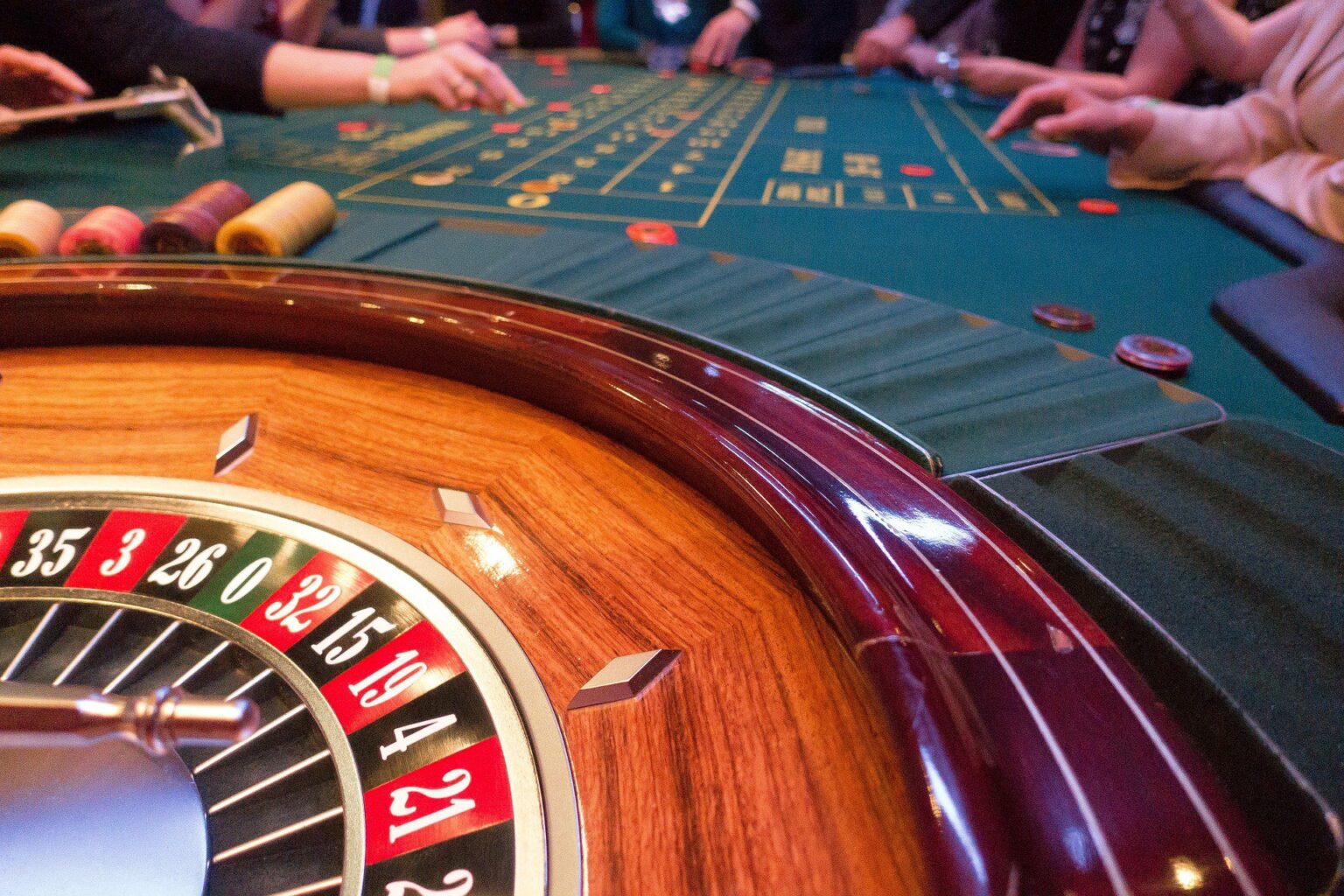
Roulette warrants close consideration because the house edge is fixed and completely unrelated to your betting choices, yet it varies significantly between the two main variants. European roulette, with its single zero pocket, carries a house edge of 2.70% on all bets except one. American roulette includes a double zero pocket, nearly doubling the house edge to 5.26%. This single rule difference is one of the most evident examples of how game selection directly influences your expected loss per spin. In France, European roulette is the standard offering, and we always advise choosing it over any double-zero variant if you have the option. The mathematics are unambiguous: over 100 spins wagering €10 each, your theoretical loss on European roulette is €27, while on American roulette it rises to €52.60, for the exact same betting experience.
The La Partage Rule and Its Effect on Even-Money Bets
French roulette often incorporates a rule called «la partage,» which is particularly relevant for players in France. This rule applies to even-money outside bets such as red/black, odd/even, and high/low. When the ball lands on the single zero, instead of surrendering your entire wager, you lose only half of it. This seemingly small adjustment halves the house edge on those specific bets from 2.70% to 1.35%. We consider this among the most player-friendly rules in the entire casino environment, and it is a direct mathematical concession that lowers the operator’s advantage. If you like roulette and prefer the lower volatility of even-money wagers, searching for tables that enforce the la partage rule is a concrete, actionable way to improve your expected return without changing how you play.
Picking a Platform That Aligns With an Informed Player’s Needs
When you internalize the mechanics of the house edge, your requirements for choosing an online casino shift. You start prioritizing openness of RTP figures, the access of low-edge table games, clear bonus terms, and verifiable licensing above superficial features like flashy animations or aggressive marketing. A platform that simplifies to find game information, that features European roulette with la partage, that reveals its licensing details openly, and that handles withdrawals in a reasonable timeframe is a platform designed for players who grasp the mathematics. We find that Malina Casino meets these criteria, providing a curated library of games from audited providers, euro-denominated accounts that eliminate conversion friction, and a mobile experience that preserves full game functionality without compromising RTP.
The house edge is not an enemy to be conquered; it is a cost to be handled. Every form of entertainment has a cost, whether it’s a cinema ticket, a streaming subscription, or a meal out. Casino gaming simply shows its cost as a statistical expectation rather than a fixed price. By choosing games with lower edges, understanding the terms of the bonuses you accept, and setting firm session limits, you manage the rate at which that cost builds up. The operator provides the platform, the games, and the security; you provide the discipline and the informed decision-making. That partnership, based on a clear-eyed view of the mathematics, is the most solid foundation for any engagement with online casino entertainment. We encourage you to take the knowledge from this article and apply it directly: check an RTP, compare two roulette variants, or read a bonus terms page with fresh eyes. The edge is always there, but now you see it clearly.